Jet Fuel Doubled. Here's What's Already Different About Your Trip.
Routes cut, snacks gone, fares up 24% on domestic. The carrier holding up best isn't the one you'd guess — it's the one that bought a refinery in 2012.
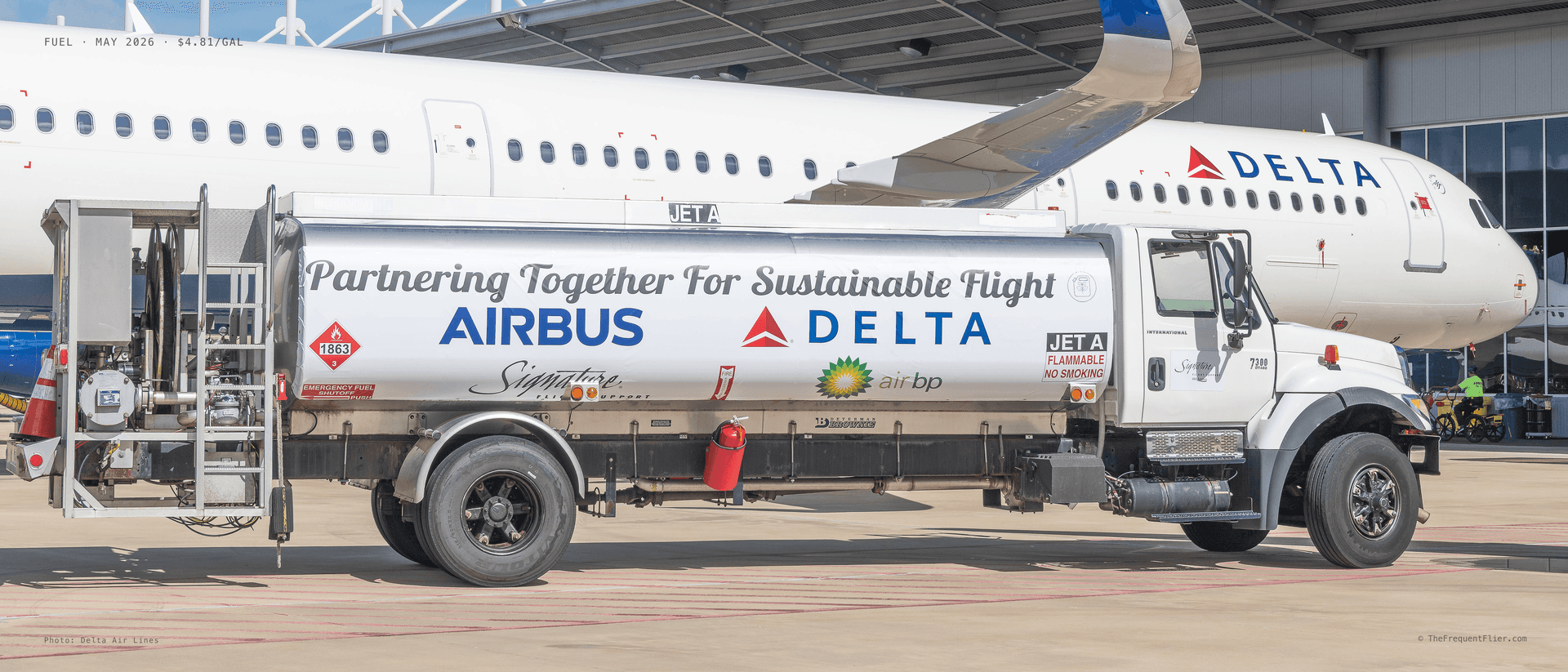
In late February, the Argus US Jet Fuel Index was at $2.42 a gallon. By April 7, it was $4.81. The IATA global average last week was $181 a barrel — roughly twice the $80-$95 pre-war baseline. The Iran war did most of the work; refining-capacity tightness is doing the rest.
I remember the 2008 spike. Airlines responded then by inventing the bag fee. In 2026, they're skipping the new-fee phase and going straight for capacity, services, and ticket prices.
What's already gone
Delta cut twelve routes in April. The list runs how you'd expect: Boston-Nassau, Detroit-Panama City Beach, Seattle to Cancún and Cabo and Puerto Vallarta, JFK-Memphis, JFK-St. Louis, Raleigh-Vegas. Leisure flying that doesn't pencil at $4 fuel. None of it is structural; all of it is disposable.
Starting May 19, Delta also stops handing out free snacks and beverages on flights under 350 miles — roughly 500 daily departures. The cost is a couple of dollars a passenger. The savings aren't material against the fuel bill. What matters is the signal: Delta is touching every cost lever it has, including ones customers feel.
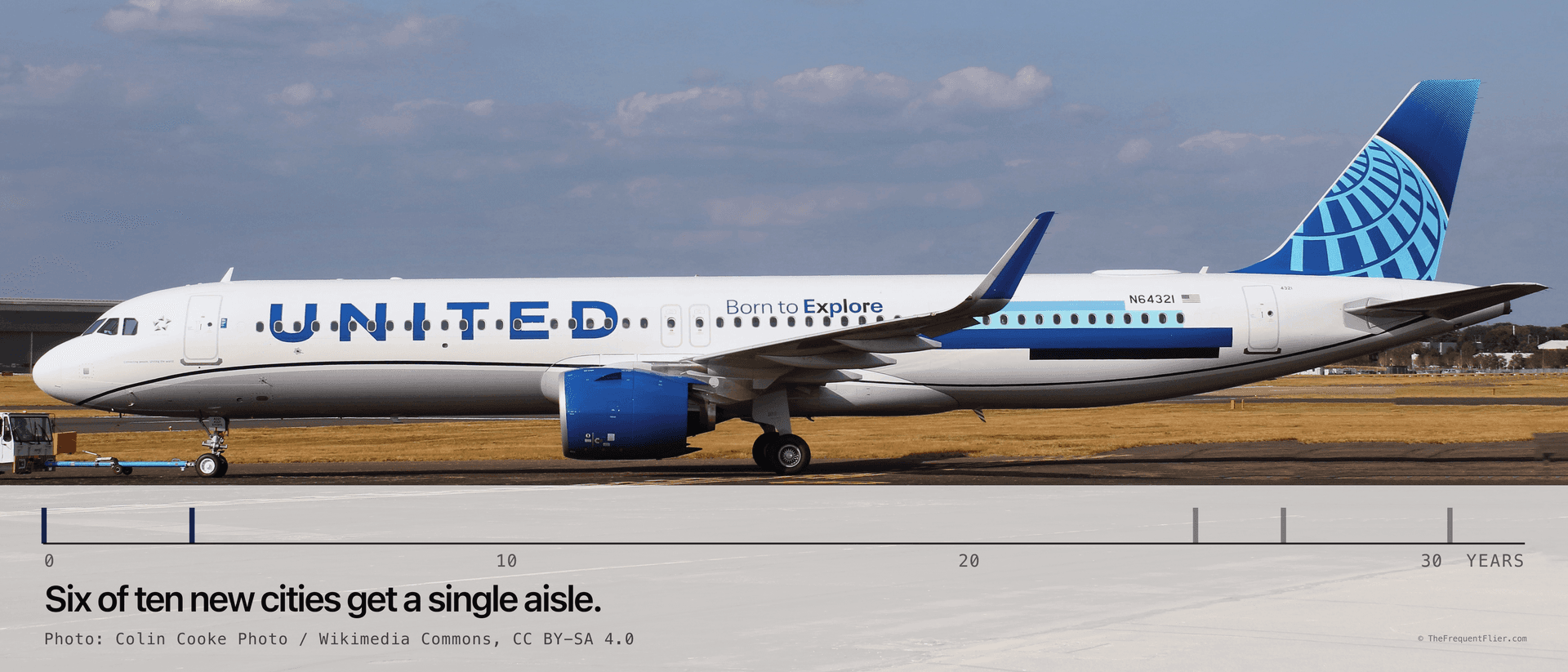
United went first. On March 20, Scott Kirby announced a 5% capacity cut — roughly 3 points off off-peak flying (midweek, Saturdays, overnights), 1 point at Chicago O'Hare, 1 point from suspending Tel Aviv and Dubai. San Jose loses 25% of its flights year-over-year. Montego Bay loses more than half from both Newark and Chicago. Kirby is modeling oil at $175 a barrel and expects it to stay above $100 through the end of 2027. United plans to restore the schedule in the fall.
American hasn't announced a comparable cut. They're absorbing the hit on the income statement instead — Q1 fuel costs up 13.2% year-over-year, the 2026 EPS guide reset from $1.70-$2.70 to a range that now includes a 40-cent loss. The annual fuel bill will run $4 billion higher than they planned in January.
The fare math is asymmetric
Airfares are up 14.9% year-over-year on average. Domestic is up 24%; international, 16%. International base fares are higher to start with, premium-cabin revenue smooths the math, and long-haul absorbs a per-gallon hit across more flight time. Domestic is where fuel is the biggest share of trip cost — and where the capacity cuts are concentrated. Less supply at higher per-mile cost compounds.
OAG flagged some routes up 50% or more, with a handful doubling. Some Europe-Asia routings have moved 5x. The summer print is going to look ugly.
Five carriers, five different bets
Each US carrier walked into this surge holding a different fuel hand.
| Carrier | Hedging policy | Q2 2026 response |
|---|---|---|
 | Hedging policyIndustrial: Trainer refinery | Q2 2026 responseCut 12 routes, eliminated short-haul snacks; Trainer flips to material P&L contributor in Q2 |
 | Hedging policyConservative hedge book; precise mix not disclosed | Q2 2026 response5% capacity cut: off-peak flying, ORD pullback, TLV/DXB suspended |
 | Hedging policyNo active hedge since the mid-2010s | Q2 2026 responseAbsorbing on the income statement; $4B+ added fuel bill, EPS guide reset to include a 40¢ loss |
 | Hedging policyDropped hedging program in December 2024 | Q2 2026 responseQ2 EPS guided $0.35-$0.65; original 2026 plan assumed $2.405/gal fuel |
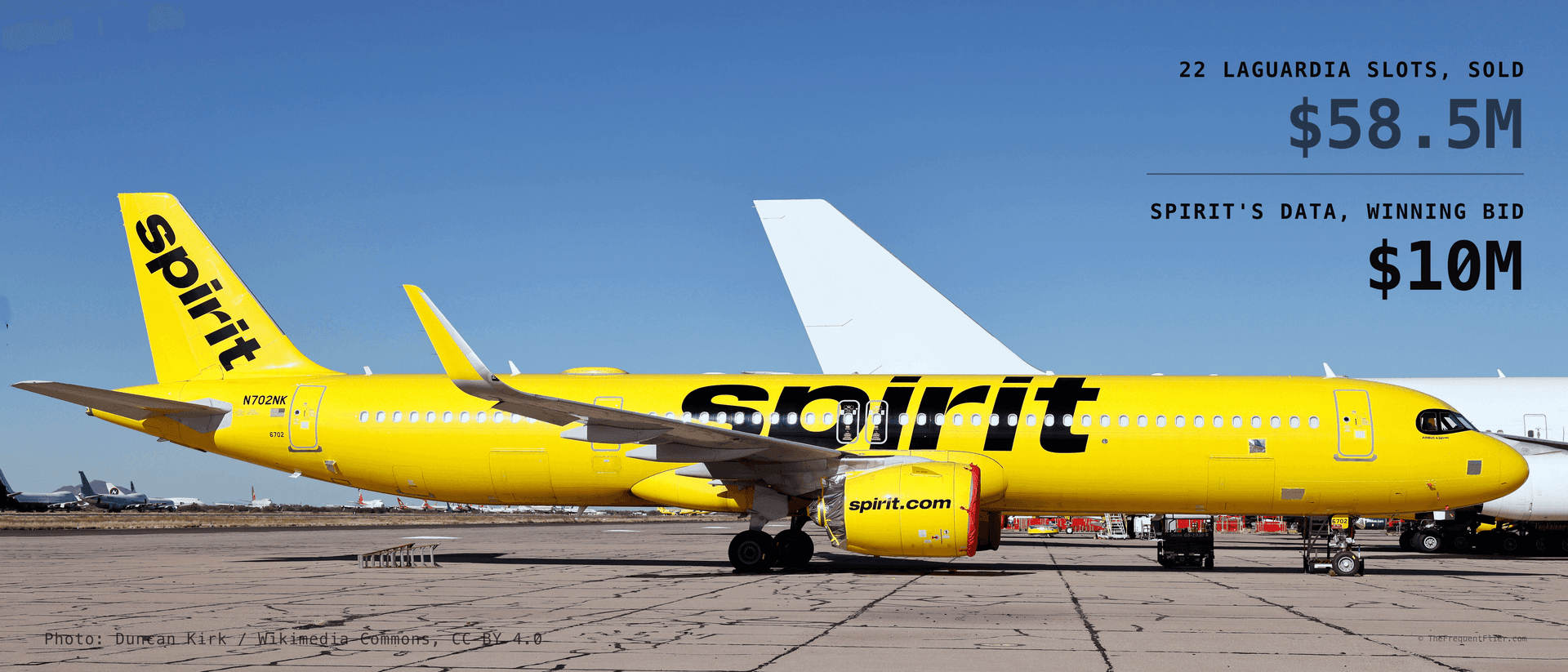
 | Hedging policyNo meaningful hedge book | Q2 2026 responseAbsorbing Spirit's stranded demand from FLL; thinner balance sheet exposure |
 | Hedging policyNo meaningful hedge book | Q2 2026 responsePicking up Spirit overlap; rescue fares and GoWild pass keep demand moving |






Delta is the only US carrier whose fuel hedge is an industrial asset rather than a financial position or a capacity-cut response.
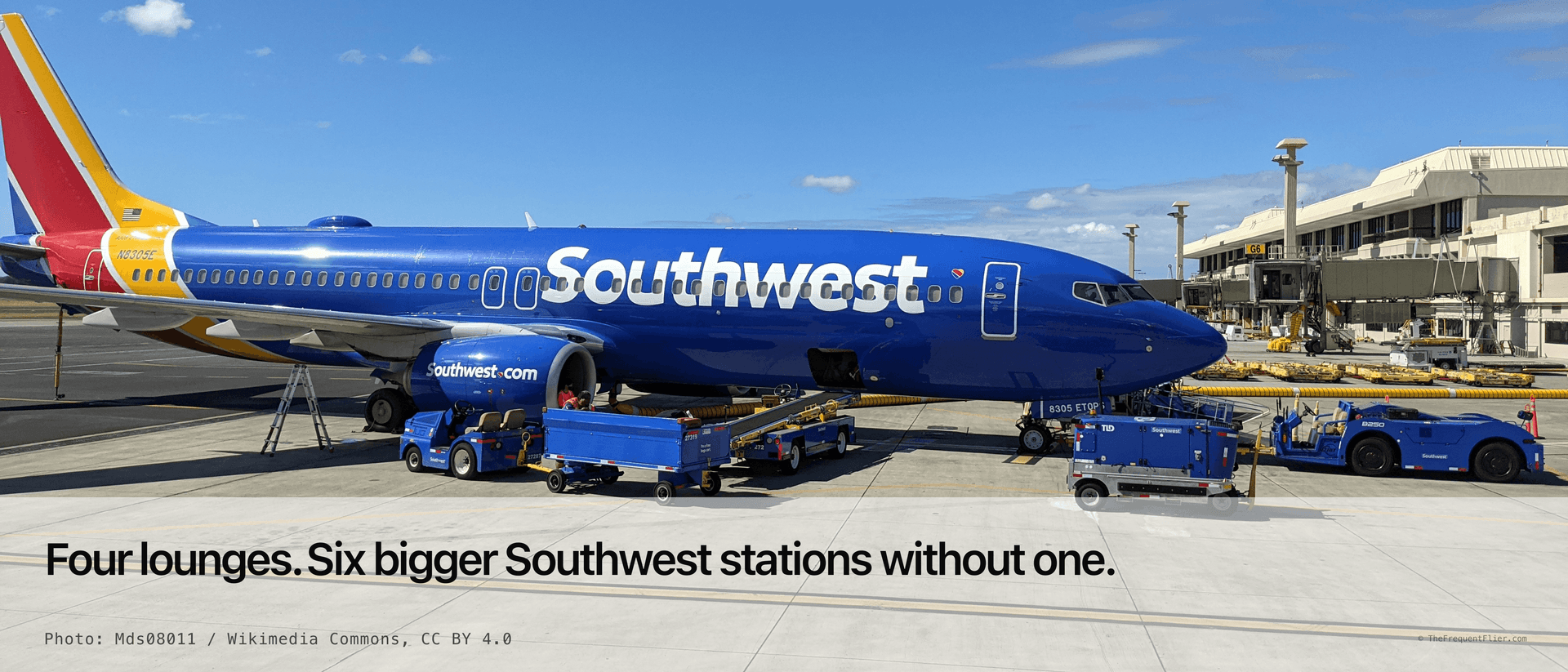
Southwest dropped its hedging program in December 2024 — the program that earned the airline $3.5 billion in savings through the 2000s and was central to its low-cost reputation. Six months later, jet fuel doubled.
Delta's hedge isn't a derivatives book. It's a refinery.
Why Trainer matters now
In June 2012, Delta bought a Pennsylvania refinery and stood up Monroe Energy as its operating subsidiary. Most of Wall Street called the deal a vanity bet.
Trainer processes 185,000 barrels of crude a day and produces about 52,000 barrels of jet fuel directly. Combined with swap agreements that trade the refinery's gasoline and diesel output for jet, in-house supply now covers about 75% of Delta's consumption.
The per-gallon contribution to Delta's fuel cost has been all over the map — about 23¢ in 2022 (~$785M), 10¢ in 2023 (~$393M), 1¢ in 2024 (~$41M), 4¢ in 2025 (~$171M). 2024 was barely a contribution.
The mechanism: Trainer pays off when the crack spread — the gap between crude and refined jet fuel — widens. That's exactly the regime we're in now. Ed Bastian said as much on the Q1 call: "Monroe's profits should begin contributing starting in Q2 2026." 2024 wasn't a strategy failure. It was a flat-spread year. 2026 is the opposite.
A refinery is a hedge that doesn't expire.
That's what Delta bought in 2012, and it's about to look smarter than ever.
What to watch
If fuel stays where it is into July and August, expect more route cuts, more service cuts, and another fare step-up. Bastian told the Q1 call Delta is operating with a "downward bias" on capacity until fuel improves. That's the polite way to say more flights are about to get killed.
The signal worth watching isn't the fuel price — that's the noise. Watch when American finally announces a capacity cut, whether Southwest revises its 2026 EPS down again, and whether Delta's Q2 fuel cost-per-gallon actually comes in below the rest of the industry's. That last one tells you whether the refinery thesis still works at $200 oil.
If you're flying this summer, plan for a degraded product.
The schedule cuts are a preview, not the full draft.
Explore the data
Agree or disagree?
Tell me what I missed, what you'd add, or where the argument breaks.