U.S. Airfares Have Risen 11 Straight Months and Are Up Nearly 30% Since November 2025
The year-over-year rate has eased from 26.7% in May to 22.4% in September, because fares rose even more over the same months of 2025. There's no year-over-year figure for October at all, because the federal shutdown kept the government from collecting October 2025 prices.
 By Michael Chen · 4 min read · November 13, 2026
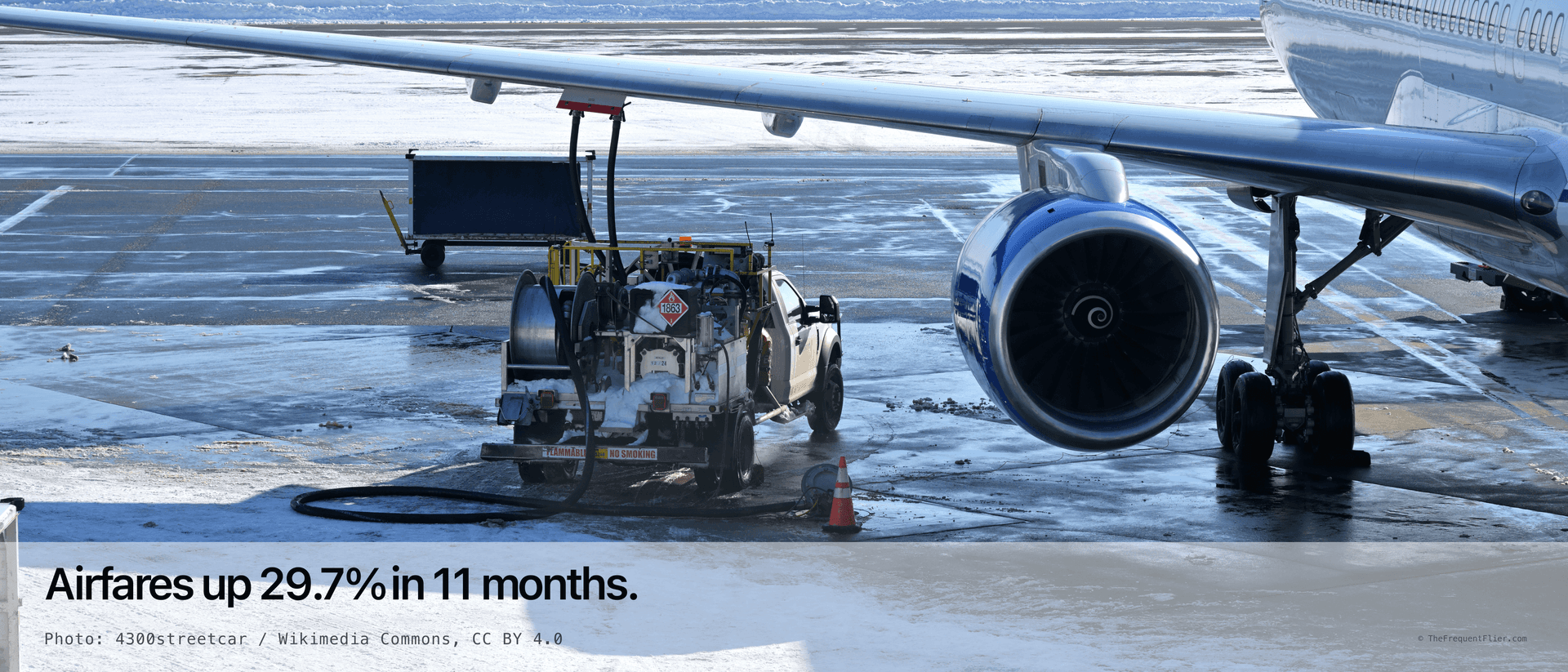
Airfares rose 0.4% in October, seasonally adjusted, according to the consumer price index the Bureau of Labor Statistics released on Nov. 10. That’s 11 straight monthly increases. Since November 2025, fares are up 29.7%.
October’s gain was the smallest since June. It came in a month when jet fuel hit its highest monthly average of the year.
A missing October
Airfare inflation is usually reported as a 12-month change, which compares a month’s prices with the same month a year earlier. October doesn’t have one. The bureau “did not collect survey data for October 2025 because of a lapse in appropriations,” meaning the federal shutdown that fall. Without an October 2025 price, the agency “cannot publish 12-month percent changes for October 2026” for most of the index, airfares included.
The latest yearly figure is September’s. Fares were up 22.4% from a year earlier, while consumer prices overall rose 3.7%.
Last summer’s jump is pulling the yearly rate down
That’s down from a peak of 26.7% in May, and the rate has eased every month since. Fares kept rising anyway. Seasonally adjusted, they climbed 6.4% from May to September.
From May to September 2025, they rose 10.1%. Each month this summer was compared with a month of 2025 when fares climbed faster, so this summer’s increases look milder in the yearly rate.
The arithmetic ran the other way in the spring. In April 2025, fares were 7.9% below a year earlier. Spring 2026 was measured against that low. That’s part of why the yearly rate jumped from 2.2% in January to its May peak.
Fuel is still climbing
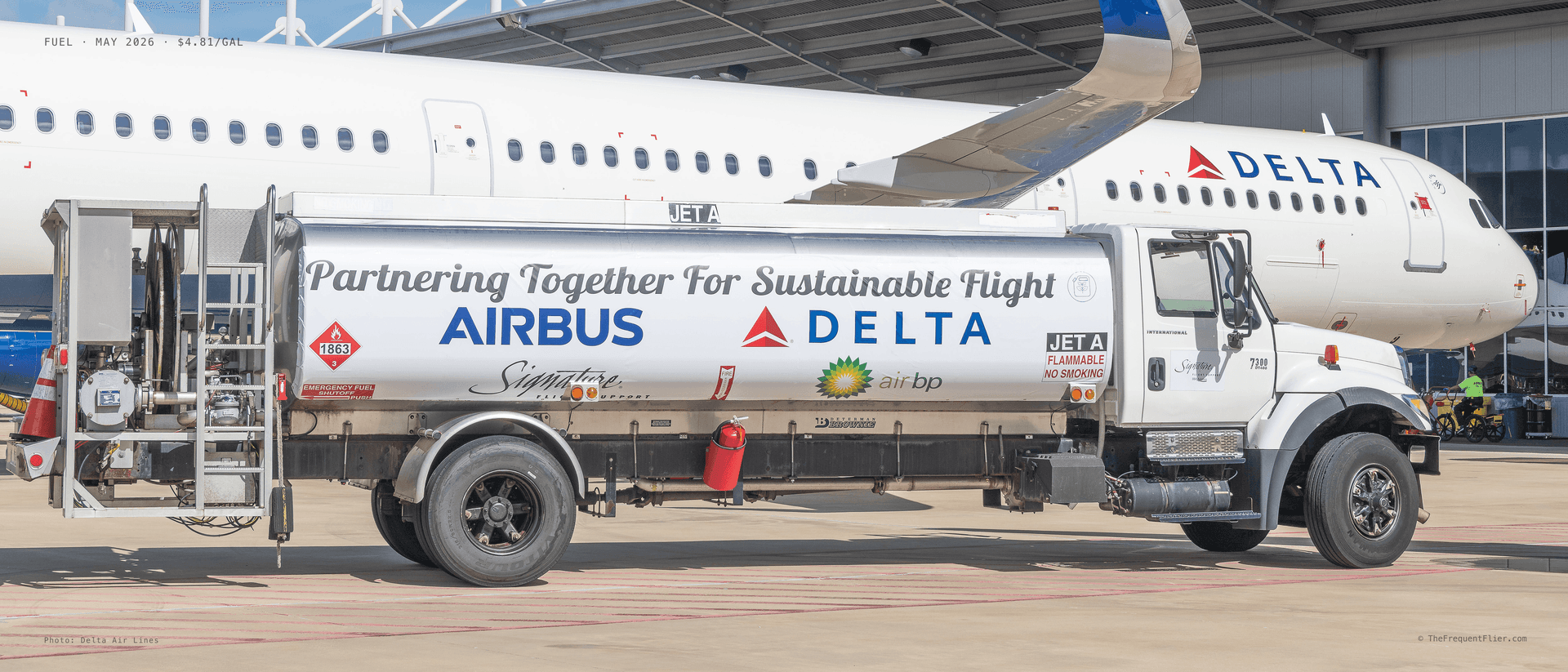
Jet fuel at the Gulf Coast benchmark averaged $4.48 a gallon in October, according to the Energy Information Administration. A year earlier, the average was $2.15. Since May, it’s up another 13.7%. The jump came in March, when the monthly average went from $2.26 to $3.70.
Monthly fare increases shrank anyway, from 2.7% in August to 1.2% in September and 0.4% in October.
Airlines are adding few seats
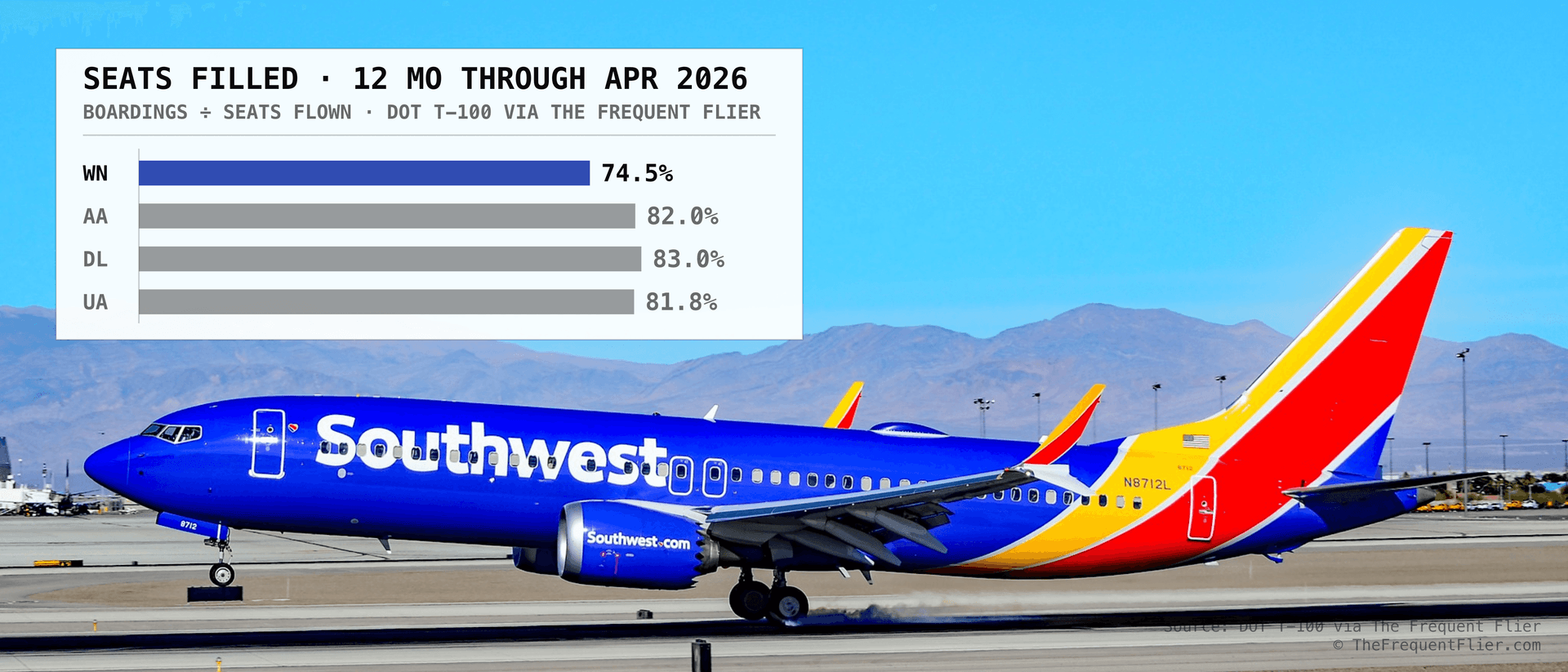
American expects fourth-quarter revenue to rise 19.5% to 22.5%. Its capacity, the seats it flies multiplied by the miles they travel, is forecast to grow only 5.5% to 6.5%. That forecast assumes fuel at about $4.70 a gallon. United expects fourth-quarter revenue to rise more than 20%, after growing capacity just 1.3% in the third quarter.
Revenue growing three to four times as fast as flying means each seat is bringing in more money. American also says that “given elevated fuel prices,” its network growth in 2027 will slow. Every carrier pays the going price for fuel and plans its own schedule. When the biggest ones slow down at once, nobody adds the seats that would push fares down.
For 2027 trips, that matters more than any one month’s price index. An airline adding fewer seats has less reason to run fare sales to fill them.
Against 2024
The October index can still be set against October 2024. Fares were 23.3% higher than two years earlier.
Explore the data
Agree or disagree?
Tell me what I missed, what you'd add, or where the argument breaks.